Windshields are not passive panes of glass. They provide as much as 30 percent of a vehicle’s structural rigidity in a rollover, act as the backboard for airbag deployment, seal out weather, and carry sensors that feed safety systems. When a rock chip blossoms into a crack on I‑4 or a storm tosses debris on a Sanford side street, that damage intersects with safety, insurance, and cost. The question most owners ask is simple: can this be repaired, or does it need a full replacement? The real answer depends on size, location, depth, the type of break, and what technology lives in your glass. Understanding those limits helps you make a smart call when you look for sanford windshield repair, sanford auto glass replacement, or mobile auto glass sanford.
What repairable damage looks like
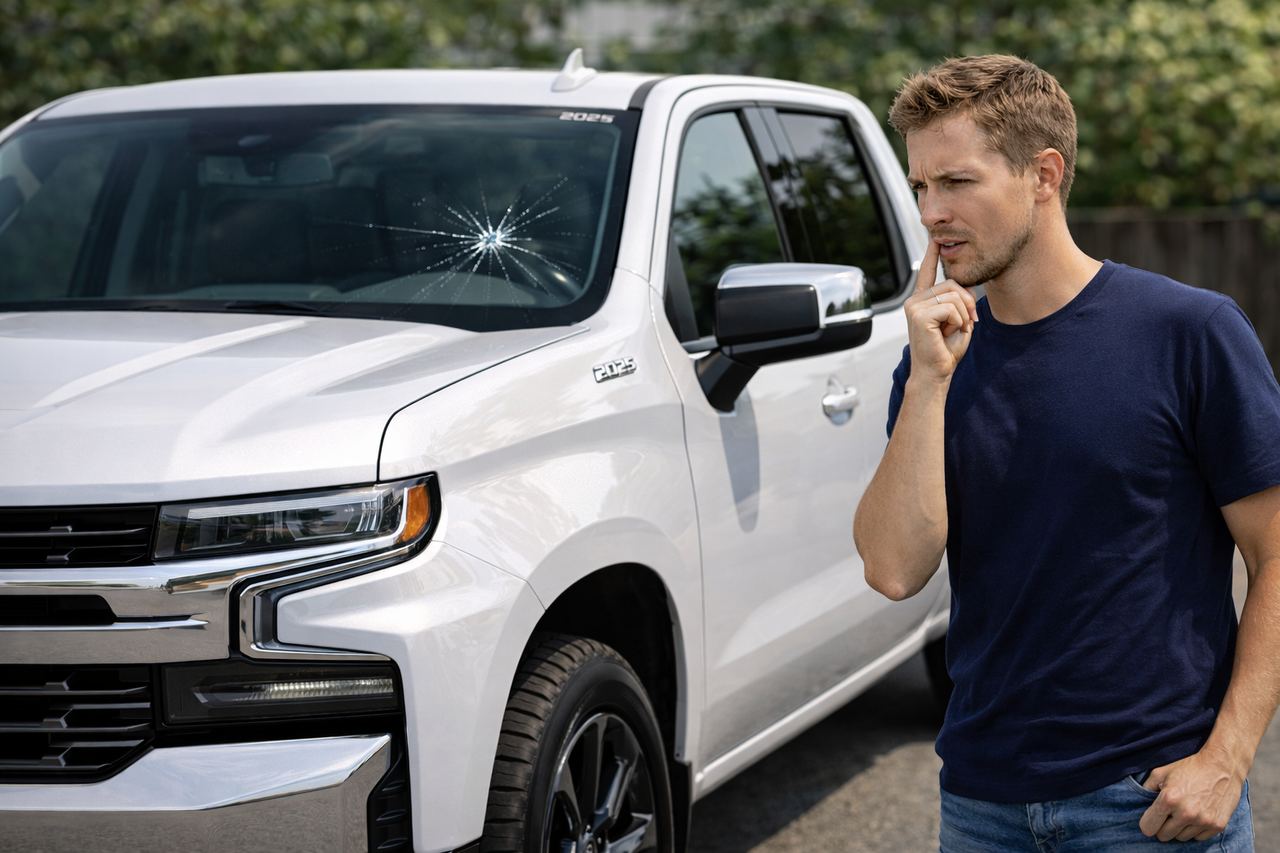
A classic repair candidate is a small rock chip with a tight impact point and radiating legs no longer than a couple inches. Glass pros have shorthand for these breaks. A bull’s‑eye is a round cone‑shaped chip. A star break looks like a small explosion with slender legs. A combination break blends both. When a crack runs, technicians measure it in inches and watch for stress points around the edges. In practice, most shops in the Sanford area will attempt repairs on chips up to roughly the size of a quarter and cracks up to six inches, sometimes ten, if the break is isolated, not contaminated, and not touching the edge. Those numbers are guidelines, not a guarantee, and the judgment call comes from experience.
Edge proximity matters more than many expect. A three‑inch crack in the center of the glass is less worrisome than an inch‑long crack that kisses the black ceramic border. The edges carry more stress from body flex and temperature swings. If a crack reaches the perimeter, the bond between glass and frame is compromised, and the risk of future propagation jumps. A seasoned sanford windshield repair tech will gently tap around the edges and watch the legs. If they travel or shimmer, that piece of glass is living on borrowed time.
Depth is the other quiet culprit. Modern windshields are laminated, two sheets of glass bonded to a plastic interlayer. Superficial breaks live in the outer layer and often respond well to resin injection. If the impact penetrates into the inner layer or leaves crushed glass around the pit, resin may not restore strength. You can’t see the interlayer without tools, but a light at an angle and a probe tell a story. When you call for sanford mobile windshield repair, ask if the tech carries a pit gauge and UV inspection light. It’s a small signal that they’re evaluating depth, not just size.
Why repair limits exist
Repairing glass is an exercise in physics and restraint. Resin travels into cracks by capillary action and vacuum, then cures under UV light. The technician stops the crack, replaces as much windshield chip repair sanford nc air as possible, and bonds the fracture to arrest future growth. This works well when the break has clean walls and a single entry point. It struggles where glass has splintered, where multiple legs are branching in different layers, and where contamination has sat in the break for weeks.
Think about heat. Park a car in the Florida sun and the windshield can hit 140 degrees. Drive into a cool thunderstorm and the temperature drops fast. Laminated glass expands and contracts, the edges flex with the body, and pre‑existing cracks want to lengthen. A proper repair restores some stiffness and reduces optical distortion, but it can’t make the glass brand new. Limits exist because physics does not negotiate.
On newer vehicles, repair limits are tied to technology. Advanced driver assistance systems rely on camera views through the windshield and radar or lidar that sometimes live behind the glass. Even a perfect resin fill can change light transmission characteristics or leave a faint blur, called bloom, near the break. Most automakers caution against repairs directly in front of a forward camera’s field of view. If the damage sits within that zone, sanford auto glass repair may mean replacement plus calibration, not a simple chip fill.
Location, sensors, and safe zones
Technicians don’t just see glass; they see zones. The driver’s primary viewing area, roughly the rectangle from the steering wheel up to the roofline and a foot to either side of center, gets the most scrutiny. A small chip in that zone can sometimes be repaired, but visible scarring remains, even with textbook technique. If a scar causes visual distraction or leaves a hazy spot at night, the repair isn’t a win. Some shops draw a hard line: if the chip sits dead center and the driver will look through it constantly, they recommend replacement.
Around the rearview mirror, the glass may house a forward‑facing camera for lane keeping, an infrared sensor for automatic high beams, a rain sensor, and the attachment pad for the mirror mount. A stone impact anywhere in that cluster risks more than a blemish. Resin repairs in this area can alter the way raindrops refract infrared light, confuse a camera during calibration, or simply block the view. Local sanford auto glass repair techs will often decline repairs inside an imaginary half‑dollar circle centered on that sensor pack.
Edges and corners are the stress zones. Longitudinal cracks that start from a lower corner after a pothole hit on 17‑92 usually trace back to edge damage from a past chip, rust under the molding, or a body twist. Repairing a long corner crack is like stitching a tear at the seam of a sail. The glass may hold for a while, then fail during the next temperature swing. This is one of the hardest limits: damage that touches the edge rarely makes a good repair candidate.
Florida insurance realities that influence the choice
For years, Florida law allowed zero‑deductible windshield replacement on many policies. That changed in 2023, and the current landscape varies by insurer and deductible. Some carriers still waive deductibles for windshield repair, encouraging a quick chip fix before it becomes a replacement claim. Others apply comprehensive deductibles to replacements but not to repairs. If a rock chip repair in Sanford costs 80 to 150 dollars and a replacement runs 300 to 1,200 dollars depending on options, the math favors early action.
If you carry a high deductible and the damage sits at the cusp of repair limits, a shop that pushes for replacement may not be serving your wallet. Ask explicitly: if we attempt a repair and it fails, what happens? Many reputable sanford windshield repair businesses will apply the repair fee to a future sanford windshield replacement within a set window. Get that policy in writing. It turns a marginal call into a low‑risk trial.
Glass types and how they affect outcomes
Not all windshields are created equal. Original equipment (OE) glass matches the optics, acoustic damping, and sensor windows specified by the automaker. Aftermarket glass quality ranges from excellent to mediocre. If you need a full sanford auto glass replacement, it pays to ask for OE or an OE‑equivalent brand, especially on vehicles with large HUDs, thick acoustic interlayers, or complex camera brackets. Cheaper glass can shimmer in the sun, buzz at highway speeds, or complicate calibrations.
For repairs, glass type matters less than condition. An older windshield with a sandblasted surface from years of I‑4 commuting has micro‑pits that scatter light. Even a perfect chip repair will sit in a sea of sparkle and may be more visible. On the flip side, a newer windshield with a clean surface tends to hide repairs better. If you’ve been putting off replacement and have multiple repaired chips plus widespread pitting, at some point the overall clarity becomes the limiting factor. Glass does wear, and in this case a sanford windshield replacement restores safety and comfort more than anything else.
The technician’s toolkit and technique
The best repairs come from patient prep and clean resin chemistry. In the field, especially for sanford mobile windshield repair, techs work under sunshades to control temperature. They drill only if necessary to open a pit, limit heat to avoid blooming, and use vacuum‑pressure cycles until air bubbles disappear. A good tech will move a probe around the legs of a star break to help resin travel, then cap with a pit filler and polish until smooth. The process takes 20 to 40 minutes for a straightforward chip and longer for complex breaks.
Where repairs go wrong is contamination and haste. If you have a cracked windshield in Sanford and keep driving through afternoon storms, dirty water and road film work their way into the break. Resin won’t bond to grime. Cover a fresh chip with a small piece of clear tape as a temporary bandage, then schedule rock chip repair sanford as soon as practical. It sounds trivial, but it can be the difference between a nearly invisible repair and a permanent gray blemish.
When replacement is the safer call
Some situations push past the repair boundary even if size or length looks borderline:
- A crack that touches or runs along the glass edge, especially near corners, because structural stress concentrates there and repairs rarely hold long-term.
- Multiple intersecting cracks or a combination break with crushed glass around the pit, since resin cannot rebuild strength in pulverized zones.
- Damage in the driver’s primary line of sight that will leave visible scarring or haze, which can cause glare and distraction at night.
- Any break that intrudes into the sensor cluster area or forward camera view, where optics and calibrations are critical to ADAS performance.
- Penetration into the inner glass layer or delamination signs, indicated by milky edges or bubbles, because the laminated structure has been compromised.
The safety rationale sits on two pillars. First, a windshield must support airbag deployment. If the bond to the frame or the glass integrity is questionable, the bag can push the glass outward and fail the choreograph. Second, driver visibility relies on clean, undistorted optics. Haze and internal fractures scatter headlight glare in the rain. Replacement restores both.
Calibration is not optional on ADAS cars
If your car has lane centering, adaptive cruise control that sees lane lines, automatic high beams, or forward collision warnings, there is almost certainly a camera staring through the upper windshield. Replace that glass and you change the camera’s relationship to the world by a few millimeters. It’s enough to skew lane readings and distance estimates. After sanford auto glass replacement, a calibration puts the system back into spec. Some models allow static calibration in a shop bay with targets and a level floor. Others require dynamic calibration, a drive on well‑marked roads at prescribed speeds.
Calibration adds time and cost but is part of the safe completion. Shops that offer sanford mobile windshield repair may still route ADAS calibrations to a facility, or bring portable targets to a flat lot. Ask what your vehicle needs. If a shop shrugs off calibration with, “It should learn on its own,” keep looking.
Mobile service versus shop work
Mobile auto glass sanford is popular for good reason. A tech can meet you at home or work, fix a chip in half an hour, and get you back to life. For simple repairs and standard replacements on vehicles without ADAS, mobile service works well. Controlled environments still matter. Avoid direct midday sun during resin curing, keep the work area free from dust, and ensure the glass temperature is moderate. A thoughtful mobile tech will schedule around those constraints.
Shop work shines when complexity rises. Static calibrations require level floors and target rigs. Replacements on vehicles with heated windshields, heads‑up displays, or intricate trim benefit from a bench, proper lighting, and specialized adhesives. If your vehicle needs urethane with specific modulus or a precise safe‑drive‑away time, a shop has the inventory and the climate control to hit those specs. A good provider will advise you honestly which venue suits your situation.
Cost, time, and material reality
Chip repairs in the Sanford market typically fall between 80 and 150 dollars for the first break, with a modest add‑on for each additional chip done during the same visit. Expect 20 to 40 minutes per chip, plus setup. A standard windshield replacement without ADAS calibration often lands between 300 and 600 dollars, depending on glass brand and vehicle. Add acoustic interlayers, solar coatings, HUD, or complex brackets, and the part cost alone can reach 700 to 1,000 dollars. Calibration fees range from 125 to 350 dollars per procedure, sometimes more for luxury brands.
Adhesive choice affects when you can drive. Urethanes list safe drive‑away times based on temperature, humidity, and the number of airbags. In central Florida’s climate, one to four hours is common. A pro will explain that window and place a sticker on the glass. Resist the urge to slam doors with the windows up for the first day. Pressure spikes can disturb a fresh bond.
Common myths that muddy decisions
It’s easy to get bad advice about glass, often with confidence. A few persistent myths:
- “If you can feel it with your fingernail, it has to be replaced.” Fingernail tests measure surface depth, not structural depth. Some deep‑looking chips are fully repairable, while some shallow‑appearing breaks have internal delamination. Assessment tools beat fingernails.
- “Repairs are invisible.” Good repairs are discreet, not invisible. Expect a faint outline or a small speck at the impact point. From the driver’s seat, it should not distract.
- “Driving will seal the crack.” Heat and vibration do the opposite. A small chip that could take resin cleanly on Monday can turn into an eight‑inch crack by Friday afternoon after a hot‑cold cycle and a pothole.
- “All glass is the same.” Optics, acoustic qualities, and sensor windows differ widely. If your vehicle has HUD or complex ADAS, push for OE or high‑tier aftermarket glass.
- “Calibration is a dealer-only task.” Many independent sanford auto glass repair shops perform calibrations to OEM procedures with the right equipment. The key is capability, not the sign on the building.
A practical way to decide, step by step
When you discover damage, keep it simple. Cover the chip loosely with clear tape to keep out moisture and dirt, then call a trusted shop for a same‑day opinion. Share details that matter: where the break is, how long the crack runs, whether any legs reach the edge, and whether the car has cameras or a HUD. Ask for photos and a measurement if a mobile tech visits. If repair is offered, confirm the warranty. If replacement is recommended, ask about glass brand, urethane type, safe drive‑away time, and calibration plan. Bring your insurance card so the shop can check coverage and help file the claim if you want to use it.
Side and rear glass are a different game
Windshields are laminated. Side and rear windows usually are tempered, which shatter into beads on impact. That means sanford car window replacement is almost always a replacement, not a repair. There are rare laminated side glass applications on high‑end models, but they are the exception. If a rear door window breaks, plan for vacuuming shards from the door cavity, replacing the regulator if damaged, and resealing the vapor barrier to keep Sanford thunderstorms out of your door card. A mobile team can handle most of this in a driveway if parts are available.
A technician’s view from the field
On a hot August day, I met a customer in a Sanford office park with a star break just above the wiper sweep, center‑left. The chip looked modest, but the left leg ran faintly toward the black edge. I set a shade tent, cooled the glass with ambient air, and probed the legs. The left leg flexed but stopped shy of the frit. Based on size and location, we tried a resin fill with a gentle vacuum cycle. The legs cleared nicely, and under UV the bloom was minimal. Six months later, after a couple of cold snaps, the repair held.
Contrast that with a crossover where the crack started as a pin‑sized chip near the passenger A‑pillar, ignored for three weeks. By the time I saw it, a foot‑long crack ran into the top edge. On that vehicle, the camera cluster sat behind the mirror and the HUD projected through the glass. Repair was off the table. We ordered OE glass, set it in the shop with correct urethane, waited the prescribed cure, then performed static and dynamic calibrations. The bill was higher, but the owner regained crystal optics and working lane keep. The lesson wasn’t “repairs don’t work,” it was timing and location matter, and sensors raise the stakes.
Choosing a provider in the Sanford area
You’re not picking a commodity. You’re hiring judgment. Look for a sanford auto glass repair company that:
- Explains repair limits without hedging, and shows you the break under light rather than just telling you.
- Carries clear policies on repair warranties, replacement glass brands, urethane cure times, and ADAS calibration.
- Offers both shop and mobile service, and steers you to the right venue for your vehicle and damage type.
- Works smoothly with insurers but will also give you an honest cash quote that reflects real costs, not teaser pricing.
- Has technicians with certifications or documented training, and the equipment to calibrate your specific make.
If a shop promises every chip is repairable or every replacement can be done curbside with sensors, be cautious. The best pros say “it depends,” then show you why.
How the weather here plays into decision making
Central Florida serves up humidity, summer downpours, and rapid temperature shifts from sun to storm. Moisture enters open breaks and binds with dust. When resin meets that mix, microbubbles remain. A quick temporary cover and a fast appointment help. On the other side, glass temperature can rise quickly in a parked car. Repairs and replacements go better when the glass sits between roughly 50 and 90 degrees. If you schedule sanford mobile windshield repair, ask the tech to work early or under shade. In a shop, climate control solves most of it, which again pushes complex work indoors.
Rock chips, small cracks, and the clock
Time is the quiet limit on repairability. A fresh rock chip is simple. A two‑week‑old chip that has seen rain, car washes, and heat cycles gains contamination and often grows micro‑legs invisible to the naked eye. If you commute daily and notice a new chip tonight, consider phoning for rock chip repair sanford tomorrow morning. It’s not panic, it’s preserving your options. Most shops can slot a quick repair into a day’s schedule, especially for existing customers or as a mobile drop‑in.
The economics of doing it right
Shortcuts cost money later. A low‑grade urethane can save a few dollars but demand longer safe drive‑away times or lose bond strength. A bargain aftermarket windshield can distort the HUD or create a faint double image of headlights at night. Skipping calibration might not trigger a warning light, yet the car could read lane lines wrong. When you weigh quotes for sanford auto glass replacement, ask line‑item questions. Good shops will itemize glass, moldings, urethane, labor, and calibration. If you get a single rock‑bottom number with no detail, the savings are coming from somewhere.
Final guidance for Sanford drivers
If you can, prevent the damage in the first place with healthy wipers and a wider following distance behind gravel trucks, but chips happen. Once they do, act quickly, protect the break, and get a professional opinion. Use repair where it fits its limits: small, clean, contained. Accept replacement when size, location, sensor impact, or structure demands it. Demand calibration when your vehicle requires it. Choose providers who treat glass not as a commodity but as a safety component.
Whether you’re searching for auto glass Sanford after a sudden crack, comparing options for sanford windshield repair versus sanford windshield replacement, or booking sanford mobile windshield repair to meet you at work, the underlying judgment remains the same. Know the limits, respect the physics, and insist on craftsmanship. The glass in front of you is part of the car’s skeleton and the driver’s sightline. Treat it that way.
Leave a Reply