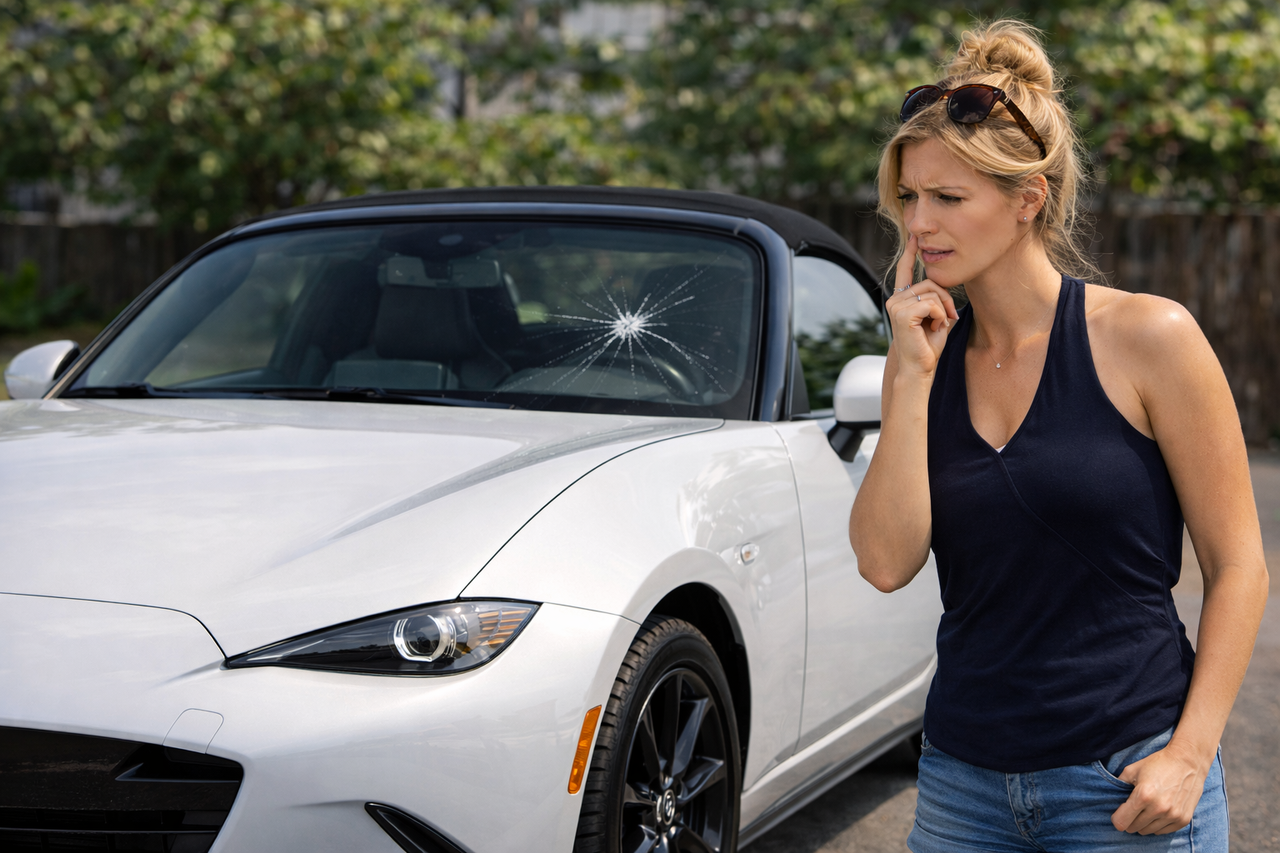
A crack in your windshield never chooses a good day. One minute you are cruising past Lake Monroe with the AC pulling its weight, the next you catch a pop from a stray pebble and a faint white line blooms across the glass. Drivers in Sanford see plenty of rock chips from I‑4 construction, heat stress from parking under cloudless skies, and sudden downpours that expand tiny defects into real problems. The moment you spot damage, a practical question appears just as quickly: is this a DIY job or time to call a pro for Sanford windshield repair?
The answer depends on size, location, type of break, weather conditions, your tolerance for risk, and the car you drive. There is a place for do‑it‑yourself kits. There are also strong reasons to hand the work to a shop that lives and breathes auto glass. After a couple decades of watching repairs succeed and fail, and more than a few Florida summers spent answering panicked calls after a crack sprinted across a windshield, I have a clear view of both paths.
What a windshield really does, and why cracks matter
Modern windshields are laminated safety glass. Two sheets of glass sandwich a plastic interlayer, usually polyvinyl butyral. That construction keeps the glass from shattering into large shards and helps maintain roof structure in a rollover. On late‑model vehicles, the windshield also serves as a mounting base and optical window for ADAS features like lane departure and automatic braking. A crack is not just cosmetic. It weakens the panel, can distort the driver’s view, and may disrupt sensors and cameras if it reaches their field of vision.
Florida law allows small cracks and chips under certain conditions, but you still have a duty to maintain an unobstructed view. More important than a citation is safety. A quarter‑sized chip can be harmless today and stretch six inches tomorrow when the afternoon sun heats the glass, then an evening storm cools it quickly. In Sanford’s climate, that cycle is relentless.
When a DIY kit makes sense
DIY resin kits exist for a reason. They cost little, fit in a glovebox, and can arrest a minor chip before it becomes an insurance claim. The best candidates share a few traits: the damage is small, recent, and clean. A classic example is a star chip the size of a pencil eraser, outside the driver’s primary viewing area, with no long legs radiating more than an inch. If you catch it the same day and keep it dry, a well‑applied kit can restore some strength and improve the optics enough that you forget it is there.
DIY kits include a low‑viscosity resin, a way to inject it under light vacuum or pressure, and curing strips for sunlight or UV lamps. Sanford drivers get a free UV lamp in the sky most days. That helps with curing but also speeds up damage if you wait too long. The clock starts the moment the glass breaks. Dust, moisture, and oils from a summer shower or a quick swipe with your thumb compromise adhesion.
Here is a simple rule of thumb. If the chip is smaller than a dime, not in the driver’s line of sight, and you can cover it with clear tape until you apply resin, DIY is reasonable. If you see a crack longer than three inches, any edge crack that starts at the perimeter, or anything that distorts your vision at the wheel, stop and consider professional help.
The limits of DIY that people discover the hard way
A few patterns show up often in Sanford auto glass repair calls. Someone used a hardware store kit on a bull’s‑eye chip, left a bubble inside the resin, and the Florida heat expanded that bubble until a hairline crack ran to the glass edge. Another driver tackled a crack under the mirror where the Lane Keep camera peers through the glass; after the DIY cure, the camera calibration drifted and the dash lit up like a Christmas tree. One owner repaired a chip on a humid afternoon; microscopic moisture in the break turned the resin cloudy. All these started with good intentions.
The obstacle is not the courage to try. It is physics. Resin viscosity, surface tension, the depth of the conical break, and the number of microfissures determine whether resin actually fills the damage. Air pockets weaken the repair. UV cure times vary with cloud cover and glass thickness. Press too hard on the injector and you can turn a small chip into a spidery network of legs. Park under a live oak and you will chase pollen grains away from the repair area for half an hour.
The other limit is optical quality. Professional resins come in different refractive indexes to better match glass and reduce the “silvering” you see at certain angles. Most DIY kits offer one blend. Your eye might not care on the passenger side, but the visible scar in the wiper sweep can be distracting.
What professionals bring that a kit cannot
A seasoned technician sees more than a chip. They map the break type, gauge stress direction, decide whether to flex the glass, and choose a resin that wicks into tight legs. Under a jeweler’s loupe and proper lighting, they can see microscopic cracks you will never notice. Many techs carry three or four viscosities and switch mid‑repair if a leg resists fill. They also know when to drill a relief point, a step that alarms most DIYers but, done correctly, stops a crack dead.
Shops that focus on Sanford windshield repair or rock chip repair in Sanford tend to have UV lamps with consistent output and vacuum bridges that draw air from the break rather than just push resin in. The difference shows up a week later when sudden afternoon rain hits hot glass. A good repair holds. A marginal one lets go.
If you drive a late‑model car with forward‑facing cameras, the technician can also recalibrate the system after a windshield replacement or, at minimum, verify that a repair did not misalign the camera. That last piece matters. I have seen adaptive cruise hiccup because of an optical artifact near the camera’s view. On those vehicles, the line between “harmless chip” and “system interference” can be thinner than you think.
Cost, insurance, and the Florida wrinkle
In Florida, comprehensive insurance often covers windshield replacement without a deductible, depending on your policy. That makes Sanford auto glass replacement more affordable than it might be in other states. Repair is usually cheaper than replacement, but when your out‑of‑pocket is zero for a new windshield and calibration, it shifts the calculus. Many drivers still prefer repair because it retains the factory seal and avoids disturbing trim. Others choose a new windshield to eliminate blemishes and restore clarity.
Prices vary, but a typical mobile rock chip repair in Sanford runs in the 80 to 150 dollar range for the first chip, with smaller add‑on fees for each additional. Replacement ranges widely, from around 300 dollars for older models to 1,000 dollars or more when ADAS recalibration is involved. Mobile auto glass Sanford providers can often meet you at work or at home, which matters if the car is your lifeline. Shops book same‑day service for damage that is spreading, and they will push non‑urgent chips to the next day when storms threaten.
Sanford‑specific stressors that change the decision
Local environment matters. Heat is the big one. On a July afternoon, a dark‑colored dashboard can heat the lower edge of the windshield far more than the shaded top, setting up temperature gradients that pull cracks along the base. Sudden downpours or a dousing from a car wash cool hot glass in seconds. If you have a chip and you can feel the glass is hot to the touch, expect that damage to grow. That is one reason Sanford mobile windshield repair techs often try to schedule early morning visits, when the glass is cooler and resin behaves.
Construction debris from I‑4 and State Road 46 adds more chips than you might see in a quiet suburb. If your commute runs through active zones, you will see more star breaks than bull’s‑eyes. Stars have multiple legs and are harder for DIY resin to penetrate fully. Add sand and grit from roadside shoulders and you get contaminated breaks if you drive for days before addressing the damage. That contamination shows up as cloudy streaks even after a careful repair.
Finally, tree cover helps with heat but adds sap and pollen that can ruin a DIY attempt. If the only shade at home is under live oaks, either bring a canopy and a blower to clear dust or call a pro with a mobile tent setup.
Repair or replace: the decision tree in practice
Every case turns on a few physical facts. Size rules are helpful but not absolute. A 2‑inch crack at the edge of the glass is riskier than a 3‑inch crack near the center. A chip in the driver’s line of sight, even if it is small, may be repairable structurally but still unacceptable visually. In those cases, you face a trade‑off. Keep the original windshield with a small scar, or opt for a new panel, new moldings, and a calibration appointment.
I have recommended repair for cracks up to six inches when conditions are perfect, the crack is not contaminated, and the customer understands the small chance of spread. I have also recommended replacement for a chip smaller than a dime when it sits dead center in the driver’s view and any repair would produce distortion under certain light. The key is honesty about the outcome rather than chasing rules.
If you are balancing time and cost, Sanford mobile windshield repair offers a middle path. A technician can stop by your driveway or office lot, repair a small chip in under an hour, and you can drive immediately. For one or two chips, this is hard to beat. When you see more than three chips, or a crack touches the edge, replacement becomes the smarter long‑term play.
DIY technique that actually works
If you decide to handle a small chip yourself, the details matter more than the brand on the blister pack. Make sure the damage is dry, warm but not hot, and shaded if possible. Clean the area with a glass razor and a spritz of glass cleaner away from the chip, then let it evaporate. Do not poke the chip with a pin. Tape it if you cannot repair it immediately, using clear packing tape to keep grit and moisture out.
Your goal during application is to remove bubbles and get resin to the deepest part of the break. Light pressure, patience, and a couple cycles of vacuum and pressure help. Do not rush the UV cure. Sanford sun is strong enough, but passing clouds can extend the time. Once cured, scrape the excess resin flush with a new razor blade at a shallow angle and clean the glass. Expect the repair to be 70 to 90 percent invisible, not perfect. If you need perfection in the wiper sweep, you are a replacement candidate.
The case for a trusted local shop
National chains do good work. So do independent crews who have repaired thousands of chips on the east side of town and know which neighborhoods shower windshields in acorns every fall. A local shop that focuses on Sanford auto glass repair sees the same patterns you do and stocks the trims and clips your model tends to lose during replacement. They know which glass brands produce the least optical distortion on your make and whether your camera requires static or dynamic calibration after a new windshield.
Look for technicians who explain what they see in your damage rather than rushing to the drill. If they offer both repair and Sanford windshield replacement, they can be more objective. Ask about resin types, warranty terms, and whether their mobile rigs carry UV lamps for cloudy days. A shop comfortable with ADAS calibration will say so plainly and describe the process, including the road test. Many will coordinate with your insurer directly, reducing the paperwork burden.
Sanford mobile auto glass providers are common now, and for good reason. Convenience wins. You get the same equipment curbside that used to live only in a bay. The risk is wind and dust. On breezy days, techs use wind blocks or pop‑up tents. If your appointment falls on a thunderstorm afternoon, expect a reschedule. Curing resin hates rain.
Small choices that make a big difference
There are micro‑decisions that move the odds in your favor. If a rock strikes the glass, do not blast the defroster to full hot or full cold. Keep the cabin temp moderate and let the glass equalize. Cover a fresh chip with a small square of clear tape as soon as you can. Avoid automatic car washes until you repair the damage. If you must park for hours, favor shade but watch tree sap. Check wiper blades; sharp grit caught under a blade can turn a neat repair into a scratched arc with the first swipe.
Set realistic expectations. Repair restores strength and often improves appearance dramatically. It does not erase every mark. Replacement gives you a fresh optical surface but introduces new variables: molding fit, the chance of trim rattles, and the need for an accurate camera calibration. Recent vehicles treat the windshield as part of the sensor suite. If your dash icon for lane keeping or forward collision appears after a replacement, ask for a calibration check immediately. Reputable shops that handle sanford auto glass replacement build this into the service.
A practical comparison, without the fluff
- DIY repair shines when the chip is tiny, recent, and away from critical sightlines. It costs little, takes under an hour, and can prevent spread. It struggles with multi‑leg stars, edge cracks, and humid or dirty breaks. You accept a cosmetic blemish and the small risk of future cracking.
- Professional repair brings better tools, resins, and judgment. It is the right call for larger chips, stars, short cracks, and anything near the driver’s view. It costs more but produces stronger, cleaner results with a warranty.
- Replacement is the answer for long cracks, edge damage, damage in the driver’s direct view that would distort after repair, and vehicles where ADAS performance is in question. If your insurance covers it at zero deductible, the decision often tips this way. Insist on proper calibration.
What Sanford drivers ask most
How soon should I fix a chip? As quickly as you can. Within 24 to 48 hours is ideal, before moisture and dirt move in. Tape buys time, not much else.
Can heat really make a small crack grow that fast? Absolutely. I have seen a one‑inch leg turn into a six‑inch line in the time it takes to walk into a grocery store and back, thanks to a sun‑baked dash and a pop‑up shower.
Will mobile service be as good as an in‑shop repair? In calm, dry conditions, yes. Good mobile techs carry the same injectors and resins as the shop. They control variables with tents and wind shields. On windy or rainy days, the shop wins.
Do repairs always look invisible? No. A well‑done repair often vanishes at a glance and leaves only a faint outline at certain angles. If perfection in the wiper sweep is a must, plan for sanford windshield replacement.
What about side windows? Those are tempered, not laminated. They shatter and require sanford car window replacement rather than repair. Different glass, different rules.
Integrating the decision with your routines
If your car is your daily shuttle to Orlando or Lake Mary, downtime matters. Mobile auto glass Sanford appointments early in the day let you get the repair done before heat builds. If you need a new windshield and ADAS calibration, plan a half day. Static calibrations in a controlled environment go faster; dynamic road calibrations can take a careful drive on marked roads at set speeds. Coordinate with your shop so you are not stranded without a ride.
If you manage a small fleet or rideshare in town, small habits save money. Keep a roll of clear tape and a razor in each car. Train drivers to report chips immediately and schedule a sanford mobile windshield repair the same day. A 100 dollar repair today often prevents a 700 dollar replacement next week. Fleet glass programs exist with local shops, and they are worth asking about.
Where keywords meet reality
There is a whole glossary around this topic, and much of it is practical shorthand. When someone searches for auto glass Sanford, they usually want a quick answer and a crew they can trust. Sanford auto glass repair points to chip and crack work that saves a windshield. Sanford auto glass replacement and sanford windshield replacement mean laminated windshield sanford a full panel swap with new moldings and, often, ADAS calibration. Sanford windshield repair and rock chip repair Sanford still matter because a dollar‑coin chip can be fixed beautifully if you catch it in time. Sanford mobile windshield repair and mobile auto glass Sanford reflect the convenience many of us need when we do not have hours to sit in a lobby. All these services live under the same umbrella, but the best shops will help you pick the right one rather than sell you the most expensive.
A grounded way to decide, step by step
- Look closely at the damage within a day. If it is smaller than a dime, dry, and out of the primary view, you can try a DIY kit if you are comfortable and it will not delay professional help.
- Cover the chip with clear tape if you cannot fix it immediately. Keep the glass temperature moderate and avoid car washes.
- If the crack is over three inches, starts at the edge, or sits in front of the driver, call a professional. Ask whether repair is feasible and what the optical result will look like.
- Check your insurance. If comprehensive covers windshields at no cost to you, weigh replacement more heavily, especially on ADAS‑equipped cars.
- Choose a local provider with strong reviews and clear calibration capability. For mobile service, schedule morning slots to avoid heat and storms.
Final thought from the field
You do not need to fear a cracked windshield, but you do need to respect it. Small chips are like cavities. Address them quickly and you retain the original structure with minimal fuss. Leave them to stew in Sanford heat and summer rain, and they spread at the worst possible moment. Whether you reach for a DIY kit or your favorite shop’s number, make the choice quickly, based on what you see in the glass rather than wishful thinking. A clean repair or a proper replacement restores the quiet confidence you want behind the wheel, and that is the point of the whole exercise.
Leave a Reply