Windshield glass seems simple until you have to replace it. Then the choices multiply, the acronyms blur, and every estimate looks slightly different. In Sanford, where afternoon thunderstorms, lake-effect glare, and a steady diet of highway construction can chew up windshields in a season, these decisions matter. OEM or aftermarket? Calibrate the cameras or not? Mobile service or shop install? I’ve managed installations across Central Florida and spent plenty of hours diagnosing squeaks, leaks, and ADAS sensor misreads after poorly executed replacements. The right glass and the right installer make the difference between a quick fix and a safety problem that shows up at 70 miles per hour.
This guide is grounded in what actually happens on the ground with Sanford auto glass replacement. It separates branding from performance, and it gives you a clear, defensible way to decide what to put in your vehicle when you need sanford windshield replacement or sanford windshield repair.
The stakes go beyond a pane of glass
Your windshield does three jobs that most drivers never think about. It provides up to 45 to 60 percent of roof-crush resistance in a rollover, it anchors the passenger airbag so it deploys against a solid surface, and it acts as the eyes of advanced driver assistance systems through cameras and sensors mounted to it. A sloppy installation or mismatched optical properties won’t just rattle. It can change the way your emergency systems work.
I’ve inspected vehicles where a small gap in the urethane bead allowed rain intrusion that shorted a camera module two months later. I’ve also seen a brand-new windshield with the wrong frit band tint confuse an adaptive cruise camera and cause spurious warnings on I‑4. The glass matters, but the calibration and install matter just as much.
What “OEM” means in auto glass, and why the label confuses people
OEM stands for Original Equipment Manufacturer. In auto glass, that gets tricky. Toyota’s OEM glass isn’t made by Toyota, it’s made by a supplier like AGC, Pilkington, Saint-Gobain Sekurit, or Fuyao to Toyota specifications, then branded with the automaker’s logo. Replacement OEM glass is typically the same spec: same curvature tolerances, same acoustic interlayer formulation if the vehicle had acoustic glass, same coatings, and crucially the same camera viewing area and frit pattern.
There’s also “OEM equivalent” or “OE” used informally by suppliers. That can mean the same manufacturer who supplies the automaker made the part, but it isn’t branded with the automaker’s logo. Sometimes it’s the identical windshield without the logo. Other times it’s close, but with slightly different frit shape, solar coating, or rain sensor bracket. The devil lives in those small differences, especially with ADAS.
Aftermarket glass is made by third-party manufacturers who didn’t supply the automaker for that model. Quality varies. The best aftermarket windshields meet the same safety standards and often look indistinguishable from OE. The worst have subtle distortions that only show up on a night drive under sodium lights when reflections bend in the periphery.
Sanford-specific realities that nudge the decision
Between US‑17/92 construction debris, sudden downpours that turn bug splatter into concrete, and a lot of long, sun-glared commutes to Lake Mary and Orlando, cracked windshield Sanford calls are a daily occurrence. If you run I‑4 to the attractions or commute along SR‑417, you’re statistically more likely to collect rock chips. The result is a brisk market for mobile auto glass Sanford services and plenty of same-day sanford auto glass repair offers.
Insurance also plays a role. Florida historically offered zero-deductible windshield replacement on many policies. The laws and claims environment have shifted, and carriers have become choosier about which glass and which installers they’ll approve. If you call a hotline, the default may be aftermarket glass unless you push for OEM. Some carriers will authorize OEM if your vehicle is within a certain age or if the ADAS calibration fails with aftermarket. It’s worth a calm, specific conversation before scheduling.
The real differences between OEM and aftermarket
When you strip away brand loyalty and pay attention to performance and repeat problems, four differences stand out.
Optical quality and distortion risk. The better the curvature control and laminate uniformity, the less visual distortion you’ll see, especially at the edges. OEM tends to be more consistent here. High-end aftermarket can be excellent, but I’ve seen more instances of peripheral “funhouse” effect and double images in headlights at night with budget aftermarket panes. If you do a lot of night driving on SR‑46 or I‑95, this matters.
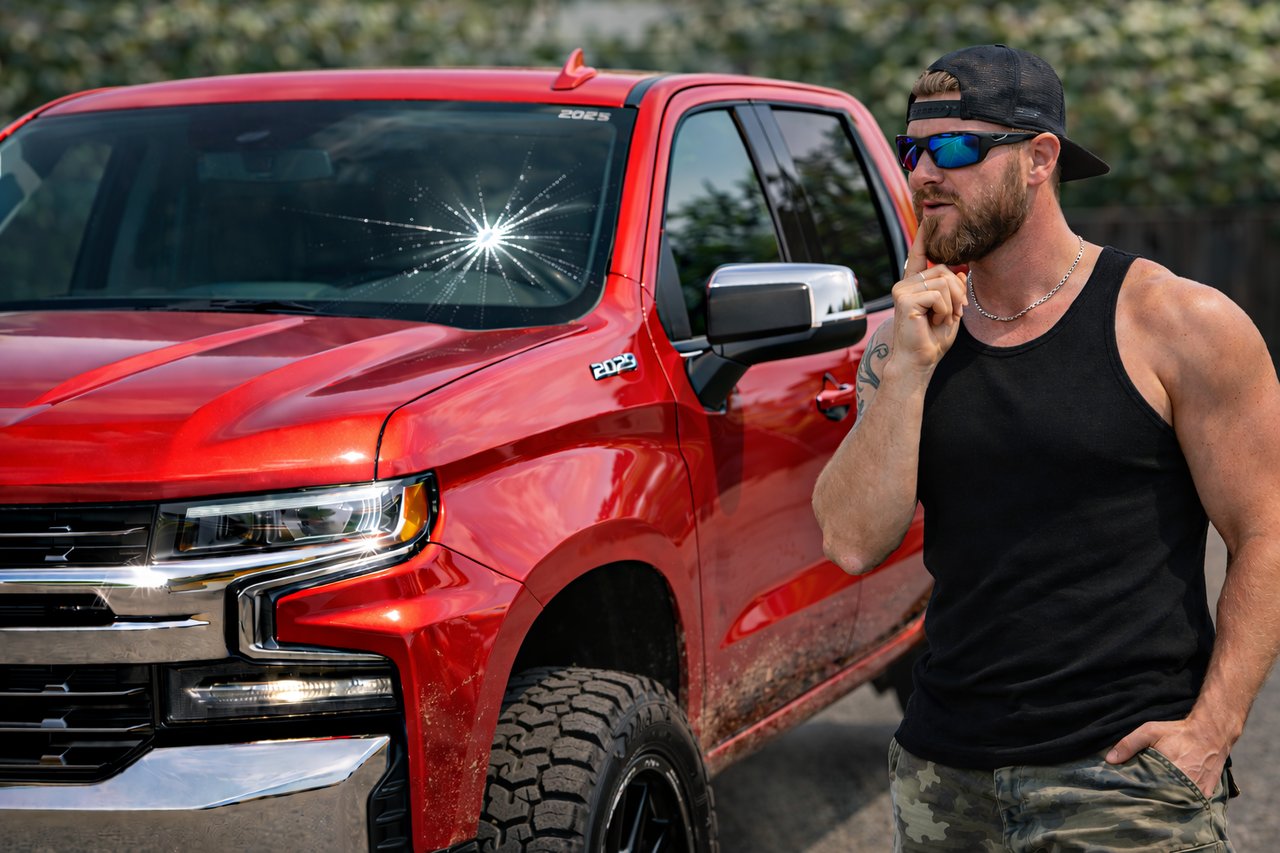
Coatings, tints, and acoustic behavior. Many late-model vehicles use acoustic laminated windshields. They shave several decibels of cabin noise and dampen high-frequency wind hiss. OEM almost always matches the original acoustic layer and solar attenuation. Some aftermarket options list acoustic glass but sound different in real use, especially above 60 miles per hour. If your cabin quietness changed after a replacement, this is often why.
Attachment points and brackets. The rain sensor pad, humidity sensor, camera bracket, and mirror mount need to be exact. A bracket a few millimeters off or at a slightly different angle forces the calibration to fight physics. OEM is rarely wrong here. Aftermarket can be perfect, but you have to choose the right brand. I keep notes on which glass variants consistently calibrate on the first try for popular Sanford models like RAV4, F‑150, and Accord. There are standouts, and there are brands I avoid for those SKUs.
Consistency panel to panel. With OEM, you get predictable frit patterns, dot matrix density, and HUD (head-up display) clarity if equipped. Some aftermarket options ghost the HUD or produce a slight double image. It’s not unsafe, but it’s irritating enough that many drivers ask for a redo.
When OEM glass is the smart call
If your vehicle relies heavily on camera-based safety systems, OEM reduces variables. That’s true for lane keeping, adaptive cruise, forward collision warnings, and automatic high beams. Vehicles with HUD, infrared-reflective coatings, special solar control, or complex rain-humidity sensor arrays also benefit from OEM. Luxury models or newer model years with unique frit shading, camera cutouts, or embedded antennas often calibrate cleaner and faster with OEM.
I’d also lean OEM for vehicles still under bumper-to-bumper warranty, not because aftermarket voids coverage, but because dealers are less likely to point fingers at an OEM part if you later chase a water leak, wind noise, or sensor issue.
Finally, if you’ve already had back-to-back aftermarket installs that won’t calibrate or keep throwing misalignment codes, pay for OEM once, and you generally end the drama.
When quality aftermarket is a sensible choice
For many mainstream vehicles without HUD and with basic or no ADAS, a good aftermarket windshield performs on par with OEM. If your primary need is to get back on the road quickly after rock chip repair Sanford attempts failed, and you want to keep the out-of-pocket low, quality aftermarket makes sense.
Even with ADAS, certain aftermarket brands produce excellent results on common Sanford platforms. I’ve had first-try calibrations on aftermarket glass for Camry, Civic, Silverado, and Explorer when the part number matched the correct bracket revision and the shop used proper targets and ride height setup. The key is brand selection and installer discipline, not just the word “aftermarket.”
ADAS recalibration: the step many shops rush and few customers see
Modern vehicles need camera recalibration after windshield replacement. The camera looks through the glass, and even tiny shifts in angle or optical properties change what it sees. There are two types: static, done in a controlled environment with targets, and dynamic, done on a specific drive cycle with a calibrated scan tool that verifies alignment on the road. Many vehicles require both. If your same day auto glass sanford sanford mobile windshield repair visit doesn’t include scans before and after, you’re rolling the dice.
Expect calibration to add 60 to 180 minutes to the job, sometimes longer for European models. Calibration requires correct tire pressures, an empty trunk, a level surface, and targets placed with millimeter-level accuracy. If a shop shrugs off these details, find another shop. In my logs, improper prep is a bigger cause of failed calibration than glass brand.
Cost and insurance realities in Seminole County
Numbers vary by vehicle, but a typical mainstream aftermarket windshield with calibration ranges from the mid $300s to $700. OEM often adds $150 to $600 on top, and luxury or HUD-equipped windshields can land in the $1,000 to $1,800 range. Insurers may steer you to lower-cost options unless you specify OEM and justify the request. Some carriers preauthorize OEM for vehicles under 3 to 5 model years old or for documented calibration failures.
If you’re paying out of pocket and you want OEM, ask your installer to quote both and explain the differences for your VIN. A good shop will pull the exact option codes for your windshield, confirm whether you have acoustic, solar, HUD, or heated wiper park zones, and match the part accordingly. Guessing is how you end up with a third appointment.
What a proper windshield replacement looks like in practice
From the field, a clean sanford auto glass repair or sanford auto glass replacement service follows a consistent rhythm. Appointment confirmation includes your VIN, ADAS features, and whether the vehicle must come to the shop for calibration. On arrival, the tech protects your paint, trims back any aftermarket tint at the frit if needed, and lays out primer, urethane, and the correct glass. The old urethane is trimmed to a thin, even bed, not scraped bare. Pinchweld primer is applied where needed and allowed to flash. The new bead is applied in a single continuous pass with an even profile.
Glass is set with alignment stops or setting tools so it lands square on the bead. The tech verifies even squeeze-out, then replaces moldings, cowls, and the mirror assembly without forcing clips. They check rain sensor gel pads, reattach any humidity or light sensors, and route wires exactly as before. The vehicle stays put for the safe drive-away time based on urethane spec and weather. Then calibration proceeds with a pre-scan, target setup, and either a static or combined static-dynamic routine. You receive a calibration report, not just a verbal “you’re good.”
Skimp on any of that, and you risk leaks, wind noise, or an ADAS that works most of the time until it doesn’t.
Shop versus mobile service in Sanford’s climate
Mobile auto glass Sanford service is convenient, and for side windows or rear glass it’s usually ideal. For windshields with camera calibration, a controlled shop environment wins. Afternoon thunderstorms dump humidity into the air, and parking lot slopes around apartment complexes near Rinehart Road are rarely level enough for precise target placement. If your vehicle needs static calibration or has sensitive ADAS, schedule shop service. If you must go mobile, pick a morning slot, provide a clear, level driveway, and ask how the tech ensures target distance and height accuracy.
Side windows and back glass: OEM vs. aftermarket matters less, but details still count
Side glass is tempered, not laminated, on most vehicles. Aftermarket side windows are usually fine as long as the curvature and tint match your original spec. The bigger issue is regulator alignment and door panel reassembly. I see more rattles and slow-up failures from rushed regulator bolts than from glass quality.
Rear windows can be tempered or laminated and may have embedded antennas or defroster grids. OEM is often better for complex rear hatches with integrated antennas. If you rely on a strong radio signal in rural stretches between Sanford and Deltona, you’ll notice a difference when an aftermarket grid underperforms.
Practical decision framework you can use
Here is a simple way to cut through the noise when you face a sanford windshield replacement decision.
- If your vehicle has HUD, complex ADAS, or specialized coatings, specify OEM and ask for a written calibration report.
- If your vehicle is older, has basic or no ADAS, and you drive mostly local roads, a reputable aftermarket brand installed by a disciplined shop is a good value.
- If night driving clarity matters to you, ask the shop to note optical distortion issues with your specific aftermarket brand on your model. They know.
- If insurance steers you away from OEM, ask them to authorize OEM contingent on failed calibration with aftermarket. Many adjusters agree.
- If you choose mobile service, confirm that your driveway allows level target placement and that the tech will perform pre- and post-scans.
Red flags that signal trouble before the glass goes in
You can avoid headaches by listening for a few tells during scheduling. If a shop dismisses calibration as unnecessary for a camera-equipped vehicle, hang up. If they won’t confirm exact part features using your VIN and windshield option codes, expect a mismatch. If they quote a safe drive-away time that ignores humidity and temperature, they’re not reading the urethane spec sheet. And if they hesitate to provide a calibration printout, they may not own the right equipment.
On the flip side, good shops in the sanford auto glass repair space will ask more questions than you do. They’ll want your VIN, trim level, whether you have lane assist or adaptive cruise, and if your windshield has a blue shade band or full solar control. They’ll explain whether they can perform sanford mobile windshield repair with calibration at your location or if the car must come to the shop. That curiosity is a sign of competence.
What happens if you keep driving with a crack
A small bull’s-eye can often be repaired. Rock chip repair Sanford services can stabilize a break and preserve the OEM seal, which is always preferable. But once a crack reaches the edge or climbs beyond 6 to 8 inches, the structural function of the windshield is compromised. In hot-cold cycles or a sudden downpour followed by highway speed, that crack can grow in minutes. Besides the safety risk, you’ll fail a basic visibility standard long before inspection day, and your ADAS camera may misread lane lines where the crack cuts through its field of view.
If you’re debating repair versus replacement, a reputable shop will opt for repair first when the damage sits cleanly within repairable geometry and outside the camera’s view zone. There’s no bonus for replacing a windshield that can be safely fixed, and keeping the factory seal avoids many downstream issues.
Managing the day of service so it goes smoothly
Plan your calendar for at least half a day if calibration is required. Clear personal items from the dash and the front passenger footwell. Wash or rinse the cowl area to keep grit out of the urethane bead and your interior. Park in a shaded, level area if you booked mobile service. If rain is likely, consider rescheduling or bring the vehicle to a shop. Ask the tech what urethane they use and the safe drive-away time for the day’s temperature and humidity. Then hold to it. Cutting the cure short because you’re late for a meeting is how windshields shift and leak.
When the car is ready, plan a short test drive on a road with clear lane lines. Verify that lane keeping and adaptive cruise see the world correctly. Listen for wind noise starting around 45 miles per hour. If anything seems off, turn around and let the shop address it while the details are fresh.
Understanding quotes that look the same, but aren’t
Two quotes for the same vehicle can differ by hundreds. Look for these variables when comparing:
Glass brand and spec. Does it say OEM, OE from the same supplier, or aftermarket? Is the acoustic layer included if your car had it? HUD compatible?
Moldings and parts. Some vehicles require one-time-use moldings or clips. Skipping them saves money now and costs you wind noise later.
Calibration method. Is static calibration included, dynamic, or both? Is there a separate fee if the system fails the first attempt?
Mobile versus shop. Mobile can cost less up front, but if you need a return visit for calibration at the shop, the time cost grows.
Warranty. A strong warranty covers both workmanship and calibration performance, not just leaks. Read the fine print.
Where a local Sanford shop adds real value
Local experience shows up in small ways. A shop that does a lot of sanford car window replacement knows which apartment complexes have level parking and which office parks allow static calibration setup without security issues. They keep on hand the right revision brackets for high-volume models, and they know which aftermarket brands calibrate cleanly on those cars. They also have relationships with insurers that speed up approvals for OEM when justified. That familiarity cuts hours off the process and eliminates repeat visits.
For your part, give the shop complete information. Mention any prior windshield replacements, windshield-mounted toll tags, dash cam mounts, or aftermarket tint encroaching on the frit. Those details change prep and prevent surprises.
Bottom line: match the glass to the vehicle and the way you drive
There isn’t a single right answer to OEM versus aftermarket. There’s a right answer for your car, your budget, your tolerance for cabin noise, and the roads you drive. If you pilot a recent SUV with lane centering and HUD up and down I‑4, pay for OEM, insist on proper calibration, and treat the windshield as safety equipment. If you drive a ten-year-old sedan to work in downtown Sanford, a quality aftermarket windshield from a careful installer will deliver everything you need without overspending.
Whatever you choose, take the process seriously. Ask the shop to document calibration, verify part numbers against your VIN, and respect cure times. The windshield is the quiet partner that keeps the rest of the safety systems honest. Get it right once, and you won’t think about it again when the afternoon thunderstorm hits and the road throws another pebble your way.
Leave a Reply